SAN FRANCISCO, CA, Jan. 09, 2026 (GLOBE NEWSWIRE) -- Disclaimer: This article is for informational purposes only and does not constitute professional advice. If you purchase through links in this article, a commission may be earned at no additional cost to you.
Search Term Context: "Best titanium cutting board" is used in this report to reflect common consumer search behavior and category language. This analysis does not rank cutting boards, endorse a single option as "best" for all households, or evaluate health outcomes. It reviews publicly available research and manufacturer disclosures to help readers compare materials and decide what aligns with their needs.
View the current TIBO offer (official TIBO page)
Something changed in how people think about cutting boards.
For decades, the decision was simple: grab whatever fits the counter and the budget, maybe pick a color that matches the kitchen. Wood for aesthetics, plastic for convenience, done. But a growing body of research—combined with broader awareness about what ends up in our food—has turned this straightforward purchase into something more considered.
A 2023 study published in ACS Environmental Science & Technology brought specific numbers to a concern many had only vaguely considered. Researchers examining plastic cutting boards estimated that polypropylene boards could release up to 79.4 million microplastic particles per person annually through normal food preparation. Polyethylene boards showed estimates ranging from 14.5 to 71.9 million particles yearly. The study noted that deeper knife grooves correlated with increased particle release—meaning the issue may compound the longer a plastic board remains in use.
The authors noted that these estimates were based on specific assumptions, and how laboratory findings translate to real-world exposure and health outcomes remains an active area of research.
For many households, this research was enough to prompt a simple question: what are the alternatives?
This is where titanium enters the conversation—and where the TIBO Titanium Cutting Board has positioned itself as one option in this emerging category.
For readers comparing cutting board materials, View the current TIBO offer (official TIBO page) provides current specifications and availability.
Why Cutting Board Material Matters to Some Households
The cutting board sits at the intersection of two kitchen considerations that don't always get the attention they deserve: what might be getting into food during prep, and what might be staying on the board after cleaning.
The Bacterial Consideration
Every time a knife cuts into a surface, it creates microscopic grooves. In porous materials like wood and plastic, these grooves become deeper over time—and they become places where moisture, food particles, and bacteria can accumulate.
Wood has natural properties that some research suggests may help address certain bacteria over time. But the mechanism isn't fully understood, and it doesn't change the fundamental issue: deep grooves in any porous material create cleaning challenges that surface washing may not fully address.
Plastic boards are often marketed as more hygienic because they can go in the dishwasher. But studies have shown that bacteria can persist in knife grooves even after standard washing cycles, particularly as boards age and grooves deepen.
The Microplastic Consideration
The 2023 ACS study wasn't the first to identify cutting boards as a potential microplastic source, but it was among the most specific in quantifying the issue. The research suggested that the mechanical action of cutting—the same action that creates grooves—also liberates tiny plastic particles that end up in food.
Researchers have reported detecting microplastics in various human samples in early studies, though the health implications and exposure pathways are still being evaluated.
Where Titanium Fits
Titanium offers something neither wood nor plastic can: a non-porous surface that doesn't develop the groove patterns common in softer materials.
Titanium is used in medical implants and aerospace applications due to properties including corrosion resistance and its non-porous composition. These same material properties translate to a cutting surface where food residue and moisture remain on the surface—where they can be washed away—rather than absorbing into the material itself.
As a metal rather than a polymer-based surface, titanium does not fragment into plastic particles during cutting. The broader question of whether this difference matters for any individual household depends on that household's priorities.
What Is the TIBO Titanium Cutting Board?
The product details below reflect publicly available information and manufacturer statements provided on the brand's official materials.
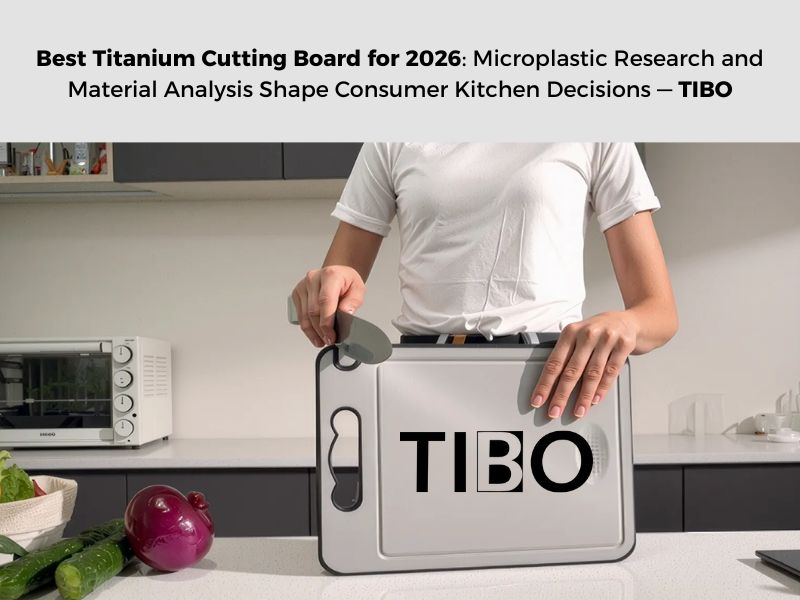
TIBO represents one approach to bringing titanium into home kitchens. Rather than a simple titanium slab, it's designed as a multi-function prep tool that consolidates several kitchen items into one surface.
The Dual-Sided Design
According to publicly available product disclosures, TIBO features a titanium surface on one side and a wheat straw composite on the reverse. The practical application: one surface can be designated for raw proteins where the non-porous surface may offer hygiene benefits, while the other side serves for produce and bread where a gentler surface is appropriate.
This dual-surface approach aligns with standard food safety guidance about using separate surfaces (or careful sequencing with thorough cleaning between) for raw proteins versus ready-to-eat foods.
Built-In Ceramic Knife Sharpener
One concern with metal cutting surfaces is blade damage. According to the company, TIBO addresses this in two ways: first, titanium is softer than the steel in most kitchen knives, so properly tempered blades shouldn't experience the dulling associated with glass or ceramic surfaces. Second, TIBO incorporates a ceramic sharpening element along the board edge.
According to the company, this integrated sharpener is designed to help users maintain knife edges during routine prep. The company positions this feature as comparable to standalone sharpening tools.
Integrated Garlic and Ginger Grater
According to the company, a textured section of the board surface functions as a grater for aromatics. This consolidates functionality that would otherwise require a separate tool.
Deep Juice Groove and Non-Slip Base
According to product disclosures, channels around the perimeter are designed to capture liquids from meat and produce. The non-slip base is intended to help keep the board stable during use.
Maintenance Profile
According to the company, TIBO is dishwasher safe. This represents a distinction from wood boards, which generally require hand washing and regular oiling.
For readers seeking additional perspective on TIBO's antibacterial surface properties and non-porous design, a separate consumer report on TIBO titanium cutting board features provides expanded coverage.
For readers researching titanium cutting board options, View the current TIBO offer (official TIBO page) for current specifications.
Comparing Materials: What the Differences Mean in Practice
Understanding cutting board materials requires looking beyond marketing claims to practical implications for daily kitchen use.
Bacterial Considerations by Material
Wood: Natural material with complex grain structure. Deep grooves develop over time and can harbor bacteria. Some research suggests natural properties may help address certain bacteria, but this doesn't replace proper cleaning. Requires regular maintenance.
Plastic: Grooves develop relatively quickly with regular use. Bacteria can persist in these grooves after washing. The dishwasher-safe convenience is offset by groove accumulation as boards age.
Titanium: Non-porous surface composition. Food residue and moisture remain on the surface where they can be washed away. The material does not develop the groove patterns common in softer materials.
Microplastic Considerations by Material
Wood: Does not release microplastics. Natural material breaks down into organic compounds if it degrades.
Plastic: Research indicates particle release during normal use, with amounts that may increase as boards develop more extensive knife grooves.
Titanium: Because titanium is a metal and not a polymer, it does not break down into plastic particles regardless of use duration.
Maintenance Requirements by Material
Wood: Requires regular oiling (typically monthly with heavy use), hand washing, and thorough drying. Cannot withstand dishwasher temperatures. Higher ongoing maintenance commitment.
Plastic: Generally dishwasher safe. Lower daily maintenance than wood but may require more frequent replacement as grooves develop (industry guidance often suggests every 12 to 18 months with regular use).
Titanium: According to manufacturers like TIBO, dishwasher safe with no oiling or special treatment required.
Knife Edge Impact by Material
Wood: Generally considered knife-friendly. Softer surface gives slightly under blade pressure.
Plastic: Moderate knife impact. Softer than metal alternatives but harder than end-grain wood.
Titanium: Despite being metal, titanium is softer than knife steel. Should not cause the blade dulling associated with glass, ceramic, or stone surfaces. TIBO's built-in sharpener is designed to address ongoing edge maintenance.
Cost Considerations by Material
Wood: Higher initial cost for quality hardwood boards. Replacement typically needed every several years depending on use and maintenance.
Plastic: Low initial cost. However, recommended replacement cycles mean recurring purchases over time.
Titanium: Higher initial investment. The durability profile may offset initial cost over years of use, depending on individual usage patterns. Pricing and warranty terms vary by promotion and are available on the official product page.
Who May Find TIBO Aligns With Their Priorities
Not every cutting board is right for every kitchen. TIBO's feature set and price point position it for specific priorities and circumstances.
TIBO May Align Well With Those Who:
Prioritize hygiene considerations. The non-porous titanium surface provides a level of cleanability that porous materials cannot match. For those who want confidence that what they see on the surface is all there is to clean, titanium's material properties may offer reassurance.
Are addressing microplastic exposure in their household. For households working to reduce microplastic sources, replacing plastic cutting boards addresses one pathway researchers have identified. Whether this matters to any individual household depends on that household's priorities.
Value consolidated kitchen tools. According to the company, TIBO's integrated sharpener, grater, and juice groove reduce the number of separate items needed for basic prep work. For those who prefer streamlined setups, this consolidation may have practical appeal.
Cook frequently with raw proteins. The non-porous surface and dual-sided design are positioned to address cross-contamination considerations relevant to those who regularly handle raw meat, poultry, or seafood.
Think in terms of long-term value. Higher upfront investment in durable equipment may appeal to those who prefer buying once over replacing repeatedly. Individual experiences vary based on usage patterns.
Other Options May Be Preferable For Those Who:
Have tight initial budgets. Titanium boards require higher upfront investment than basic plastic or quality wood options. Kitchen equipment should not cause financial stress.
Strongly prefer traditional materials. Some cooks prefer wood's aesthetics or have established routines with plastic boards that work well for their households. Material properties don't override personal preference.
Need commercial-scale equipment. Professional kitchens have different requirements than home cooks, including regulatory considerations.
Rarely cook with raw proteins. If cooking is primarily produce, grains, and prepared foods, the non-porous surface may matter less.
Questions Worth Asking Before Choosing Any Cutting Board
The right cutting board for any kitchen depends on honest answers to questions only you can answer.
How often do you cook with raw proteins? If the answer is rarely, the non-porous surface consideration matters less. If the answer is multiple times per week, those considerations may be more relevant.
What are your realistic maintenance habits? Be honest. If you won't actually oil a wood board monthly, that board will crack and warp. If you won't replace a plastic board every 12 to 18 months, you'll be cooking on a groove-filled surface. Choose materials that match your actual behavior.
How much does the microplastic consideration factor into your decisions? The research is evolving. Some households are addressing known sources now; others are waiting for more conclusive findings. Neither approach is wrong—what matters is aligning your purchase with your current priorities.
How long will you use this board? If you're in a temporary living situation, long-term durability matters less. If you're settled and equipping a kitchen for years of use, upfront investment in durable equipment may pay dividends over time.
Your answers shape which material category—and which specific product—makes sense for your circumstances.
For those whose priorities align with what TIBO offers, View the current TIBO offer (official TIBO page) for current options and terms.
TIBO Availability and Contact Information
For those interested in exploring the TIBO Titanium Cutting Board, the product is available through the brand's official website.
According to the company's website, TIBO offers:
Warranty Coverage: One-year warranty on the product
Satisfaction Guarantee: The brand advertises satisfaction guarantee coverage. Buyers should verify current terms, timeframes, and conditions on the specific order page before purchasing, as promotional terms may vary.
Customer Support:
Email: support@zsbrands.com
Phone: +1 757 414 7772
Address: 18139 Logistics Pkwy NE, 100, Covington, GA, US, 30014
Pricing and warranty terms vary by promotion and are available on the official product page.
Final Perspective
The cutting board conversation has evolved. What was once a purely utilitarian decision now involves questions about material composition, hygiene considerations, and long-term value that previous generations rarely considered.
This evolution doesn't mean traditional materials have become unusable. Wood boards continue to serve millions of kitchens effectively when properly maintained. Plastic boards remain practical for specific applications and budget constraints. Titanium options like TIBO represent a different approach for those whose priorities align with non-porous composition, low maintenance, and long-term durability.
The right cutting board for any kitchen is one that fits how you actually cook, addresses the considerations you actually care about, and serves your household over time.
Customer feedback shared on the brand's website frequently mentions convenience features, durability, and ease of cleaning. Individual experiences vary.
Availability, specifications, and current terms are maintained by the manufacturer.
View the current TIBO offer (official TIBO page) for current details.
Disclaimers
Editorial Disclaimer: This article is for informational purposes only and does not constitute professional advice. The information provided reflects publicly available details from product websites, published research, and general material science knowledge. Always verify current terms, pricing, and specifications directly with manufacturers before making purchasing decisions.
Research Attribution: The microplastic study referenced in this article was published in ACS Environmental Science & Technology in 2023. The study examined plastic cutting boards as a potential source of microplastic exposure. The authors noted that their estimates were based on specific assumptions, and how laboratory findings translate to real-world exposure and health outcomes remains an active area of research. Readers interested in the full research methodology and findings should consult the original published study. The publisher of this article did not conduct independent laboratory testing.
Results May Vary: Individual experiences with any cutting board material vary based on factors including usage frequency, cutting techniques, food types prepared, cleaning habits, and maintenance practices. The information in this article describes general material properties and manufacturer disclosures and does not guarantee specific outcomes for any individual user. Customer experiences are individual and do not guarantee similar outcomes.
FTC Affiliate Disclosure: This article contains affiliate links. If you purchase through these links, a commission may be earned at no additional cost to you. This compensation does not influence the accuracy, neutrality, or integrity of the information presented. All descriptions are based on publicly available information from manufacturer websites and published research.
Pricing Disclaimer: All pricing information, promotional offers, warranty terms, and guarantee periods mentioned were based on publicly available information at the time of publication (January 2026) and are subject to change without notice. Warranty and guarantee terms may vary by promotional period and purchase source. Always verify current pricing, promotions, and exact terms directly with the brand before making purchasing decisions.
Publisher Responsibility Disclaimer: The publisher of this article has made every effort to ensure accuracy at the time of publication based on publicly available information and cited research. We do not accept responsibility for errors, omissions, or outcomes resulting from the use of the information provided. Readers are encouraged to verify all details directly with manufacturers and consult original research sources for complete findings.
For media inquiries regarding this consumer analysis, contact the publishing organization through standard editorial channels.

Email: support@zsbrands.com Phone: +1 757 414 7772