SACRAMENTO, CA, Jan. 15, 2026 (GLOBE NEWSWIRE) -- Disclaimer: This article is for informational purposes only. It does not constitute scientific validation, medical advice, or product endorsement. If you purchase through links in this article, a commission may be earned at no additional cost to you.
View EMF Defense Shield as a category example (official EMF Shield page)
The phrase "Best EMF Blocker" is used in this 2026 report to reflect common consumer search behavior and does not indicate a ranking, endorsement, or scientific validation of any product. This consumer education report outlines what the EMF blocker category includes, what claims manufacturers commonly make, and what verification criteria informed buyers typically apply before purchasing.
All product descriptions referenced in this article are presented as examples of manufacturer-published statements within this category and are not independently tested or verified. This report does not assess efficacy or health outcomes and is intended solely to provide educational context for consumers researching EMF accessories.
What "Best EMF Blocker" Means in 2026 (Search Behavior Context)
When consumers search "best EMF blocker," they are typically seeking educational context about a product category rather than a specific purchase recommendation.
Search data indicates growing interest in EMF-related accessories as personal device usage continues to increase. Consumers encountering this category for the first time often have fundamental questions: What do these products claim to do? What materials do they use? How can buyers evaluate whether manufacturer statements are verifiable?
This report addresses those category-level questions using publicly available information from manufacturers operating in this space. The goal is consumer education, not product endorsement.
Understanding the EMF Blocker Category: What These Products Claim
EMF blocker is a broad term encompassing various accessories marketed toward consumers interested in electromagnetic field mitigation. Common product formats within this category include:
Device stickers: Adhesive accessories designed to attach to phones, tablets, and laptops. Manufacturers in this category typically claim these stickers interact with electromagnetic fields through various material compositions.
Wearable accessories: Pendants, bracelets, and similar items positioned as providing personal EMF-related benefits.
Home systems: Larger installations marketed for whole-room or whole-home applications.
What category manufacturers commonly claim:
Products in this category frequently describe using mineral-based compositions, conductive materials, or proprietary blends. Common marketing language references interaction with electromagnetic fields, though specific mechanisms and measurements vary significantly between manufacturers.
What consumers should understand:
The EMF blocker category operates largely without standardized testing protocols or third-party verification requirements. This places the evaluation burden on consumers, making due diligence particularly important before any purchase.
Materials Commonly Disclosed in EMF Blocker Products
Manufacturers in the EMF sticker category commonly reference several material types in their product descriptions:
Mineral-based compositions: Many products describe using minerals, oxides, or natural compounds. Specific percentages or sourcing details are rarely disclosed.
Conductive elements: Some manufacturers reference gold, silver, copper, germanium, or other conductive materials as part of their formulations.
Proprietary blends: A significant number of products describe technology as proprietary without detailed ingredient disclosure.
The verification gap:
Across this category, independent testing documentation is uncommon. Most manufacturer claims rely on company-published descriptions rather than third-party laboratory verification. Consumers seeking products with independent testing should specifically request this documentation before purchasing.
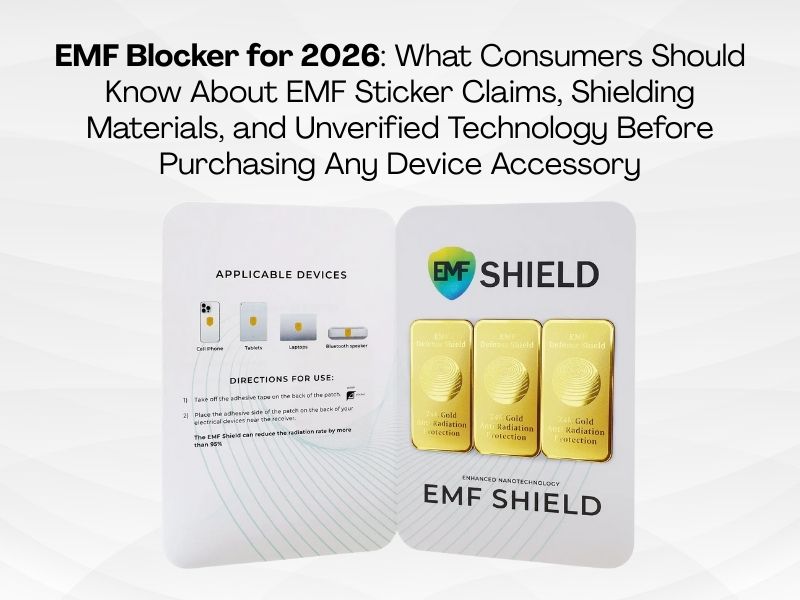
For example, one product in this category — the EMF Defense Shield from EMF Shield — describes using gold, germanium, and mineral oxides in its composition. According to that company's website, these materials are configured to interact with electromagnetic fields from devices. This represents a typical disclosure pattern in the category: materials are named, but independent verification is not provided. Consumers can view this example at the company's official page to see how such disclosures are typically presented.
View EMF Defense Shield as a category example (official EMF Shield page)
How to Evaluate Any EMF Blocker Before Purchasing
The following verification framework applies to any product in the EMF blocker category, regardless of manufacturer:
Disclosure evaluation questions:
Does the manufacturer specify exact material compositions or use vague terminology? Are manufacturing processes and material sourcing described? Does the company reference specific measurements or quantifiable claims?
Verification evaluation questions:
Does the manufacturer provide independent laboratory testing results? Are third-party evaluations available from sources not affiliated with the company? What do independent researchers or consumer organizations say about this product category generally?
Policy evaluation questions:
What refund policy does the manufacturer offer, and what conditions apply? Who is the actual retailer processing transactions? Are policy terms clearly published and easily located?
Personal criteria questions:
What level of verification do you require before purchasing any product in this price range? Are you comfortable proceeding based on manufacturer statements alone? Does the refund policy provide adequate time for your own evaluation?
Applying these questions to any EMF blocker helps identify what is disclosed, what is missing, and whether the gap aligns with your purchasing standards.
What Independent Sources Say About EMF Shielding Products
Consumers researching the EMF blocker category should be aware of broader context regarding these products:
Regulatory status:
EMF blockers are generally marketed as consumer accessories rather than regulated devices. This means manufacturers are not required to demonstrate efficacy through standardized testing before selling products.
Scientific context:
The EMF blocker category exists in a space where consumer interest has outpaced scientific consensus. Electromagnetic field research continues, but specific claims about sticker-based shielding products remain largely unverified by independent researchers.
Consumer protection perspective:
Various consumer organizations have published guidance suggesting buyers exercise caution with products making EMF-related claims. The consistent recommendation: seek independent verification before purchasing.
What this means for buyers:
The absence of regulatory requirements or scientific consensus does not mean products in this category are fraudulent. It means consumers bear the evaluation responsibility that would otherwise be handled by regulatory bodies or standardized testing.
Pricing Patterns and Refund Policies in This Category
EMF blocker products span a wide price range depending on format, manufacturer, and quantity options:
Typical pricing structures:
Single-unit sticker products generally range from $20 to $60. Multi-unit packages typically offer volume-based pricing. Wearable accessories often price higher, ranging from $50 to $150. Home systems can range from $100 to several hundred dollars.
Refund policy variations:
Return policies vary significantly across manufacturers. Some offer 30-day windows, while others extend to 60, 90, or 180 days. Conditions such as requiring authorization numbers, original packaging, or product condition requirements are common.
Example for reference:
EMF Shield, one manufacturer in this category, lists a 180-day refund policy for its EMF Defense Shield product, with returns requiring an RMA (Return Merchandise Authorization). This represents a longer-than-average window in the category. Consumers can verify current policy terms on the company's official website.
View EMF Defense Shield policy terms as a category example (official EMF Shield page)
Due Diligence Checklist for Any EMF Blocker Purchase
Before purchasing any product in this category, consider completing this verification process:
Step 1 — Review manufacturer disclosures
Read the complete product description, FAQ, and any technology explanations. Note what specific claims are made and what language remains vague.
Step 2 — Search for independent information
Look for evaluations from sources not affiliated with the manufacturer. Note whether independent testing or third-party analysis exists.
Step 3 — Verify retailer and policies
Confirm who processes transactions and what refund terms apply. Ensure you understand any conditions or requirements for returns.
Step 4 — Assess your personal criteria
Determine whether the available information meets your standards for any purchase in this price range. Decide whether the refund policy provides adequate evaluation time.
Step 5 — Document your findings
Keep records of claims, policies, and your research. This supports any future refund requests or disputes.
This process applies equally to any EMF blocker regardless of brand, price point, or marketing claims.
Summary: Consumer Education for EMF Blocker Research
This report has provided category-level education for consumers researching EMF blockers:
What this report covered:
The meaning of "Best EMF Blocker" as a search term, common product formats and claims in this category, typical material disclosures and verification gaps, a framework for evaluating any EMF blocker product, independent source context on the category, and pricing and policy patterns across manufacturers.
What this report did not provide:
Efficacy validation for any product, health-related claims or assessments, rankings or comparative recommendations, endorsement of any specific manufacturer, or scientific conclusions about EMF shielding.
The consumer takeaway:
The EMF blocker category places evaluation responsibility on buyers. Applying consistent verification criteria, understanding typical disclosure patterns, and ensuring adequate refund protection represents prudent due diligence regardless of which product attracts your interest.
Consumers who wish to examine how one manufacturer in this category presents its product can view the EMF Defense Shield from EMF Shield as a reference example.
View EMF Defense Shield as a category example (official EMF Shield page)
Disclaimer Bundle
Editorial Disclaimer: This article is for consumer education purposes only and does not constitute scientific validation, medical advice, or product recommendation. This report provides category-level information and does not independently verify any manufacturer's claims or assess any product's efficacy.
FTC Affiliate Disclosure: This article contains affiliate links. If you purchase through these links, a commission may be earned at no additional cost to you. This compensation does not influence the accuracy or editorial independence of the information presented.
No Efficacy Assessment: This report does not evaluate whether any EMF blocker product performs as manufacturers describe. All product descriptions represent manufacturer statements, not verified performance claims.
Category Information Disclaimer: Information about the EMF blocker category reflects publicly available manufacturer disclosures and general industry patterns. Individual products may vary. Consumers should verify current details directly with any manufacturer before purchasing.
Pricing Disclaimer: Pricing patterns described reflect general category observations. Specific prices change frequently. Always verify current pricing on official manufacturer websites before any purchase decision.
Publisher Responsibility: The publisher has made every effort to present accurate category information based on publicly available sources. We do not accept responsibility for errors, omissions, or outcomes resulting from the use of this information. Readers are encouraged to conduct independent research before any purchasing decision.
For questions about specific products, contact manufacturers directly.

hi@youremfshield.com