This Butterfly Is a Warning About the Future of the Food System
PR Newswire
SAN FRANCISCO, June 4, 2026
The Iowa Skipper Is a Canary in the Coalmine of Industrial Agriculture
SAN FRANCISCO, June 4, 2026 /PRNewswire/ -- As Pollinator Week approaches, Americans across the country will celebrate the bees, butterflies, moths, bats, beetles, and other pollinators that make the food system possible. These species are responsible for one out of every three bites of food people eat and play an essential role in maintaining healthy ecosystems.
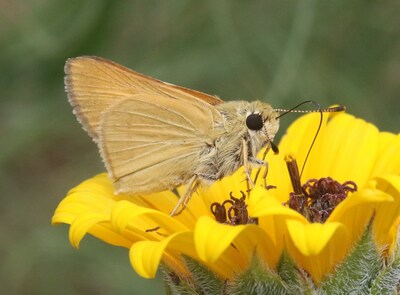
Behind the celebration lies an alarming reality: pollinators are disappearing at unprecedented rates.
That reality is at the heart of Center for Food Safety's newest lawsuit to protect the Iowa skipper butterfly, an imperiled prairie species pushed toward extinction by habitat destruction, toxic pesticide exposure, and the expansion of industrial agriculture.
This week, Center for Food Safety sued the U.S. Fish and Wildlife Service for failing to meet its legal obligation under the Endangered Species Act to determine whether the Iowa skipper deserves federal protection. The agency is now more than two years overdue in completing the required review.
The Iowa skipper may not be as well-known as the monarch butterfly, but its story reflects a much larger crisis unfolding across America.
The bright amber butterfly depends on healthy tallgrass prairie ecosystems to survive. Yet nearly 99 percent of America's tallgrass prairie has already been destroyed. What remains exists largely as fragmented habitat surrounded by industrial monocultures saturated with pesticides and largely devoid of the biodiversity pollinators need to thrive. Much of these crops aren't even used to feed us. The corn and soy grown in these decimated prairie ecosystems goes towards manufacturing biofuels or factory farm animal feed, which furthers the treadmill of the industrial food system.
The Iowa skipper is considered an indicator species—a measure of ecosystem health. Its decline signals broader ecological collapse. Like the canary in a coal mine, the butterfly warns that the systems supporting biodiversity, food production, and environmental resilience are under severe stress.
The Iowa skipper is not alone.
For years, Center for Food Safety has been at the forefront of efforts to protect pollinators from the growing threats posed by industrial agriculture. The organization has fought for protections for the monarch butterfly, challenged pesticide approvals that threaten bees and other beneficial insects, and defended the Endangered Species Act as one of the nation's most important safeguards against extinction.
Its work has repeatedly exposed a troubling pattern: federal regulators continue to approve and allow widespread pesticide use without adequately accounting for impacts on pollinators and endangered species.
That pattern is especially evident in Center for Food Safety's efforts to close the "treated seed loophole." Every year, hundreds of millions of acres of seeds coated with neonicotinoid pesticides are planted across the United States. These systemic insecticides contaminate pollen, nectar, soil, and water, and have been linked to declines in bees, butterflies, birds, and other wildlife. Yet despite their widespread use, coated seeds largely escape meaningful regulatory review.
The extinction crisis facing pollinators is not the result of a single pesticide or a single species decline. It is the predictable outcome of an agricultural model built on habitat destruction, chemical dependency, and biological simplification.
The consequences extend far beyond wildlife conservation. More than 75 percent of flowering plants and roughly one-third of global food crops depend on pollinators. As pollinator populations decline, so too does the resilience of the food system itself.
Pollinator Week exists because public awareness is finally beginning to catch up with the science. Increasingly, people are recognizing the connection between disappearing pollinators, pesticide-intensive agriculture, and the growing extinction crisis.
The Iowa skipper's fate is therefore about much more than a single butterfly. It is about whether society will act to protect the living systems that make agriculture possible before more species disappear forever.
This Pollinator Week, the Iowa skipper serves as a powerful reminder that protecting pollinators means protecting habitat, reducing pesticide dependence, and enforcing the environmental laws designed to prevent extinction. When society fights for pollinators, it is ultimately fighting for the future of the food system itself.
Photo © James Bailey, some rights reserved (CC-BY-NC)

 View original content to download multimedia:https://www.prnewswire.com/news-releases/this-butterfly-is-a-warning-about-the-future-of-the-food-system-302791620.html
SOURCE The Center For Food Safety

